The Sun Shines
Pākalā Estate
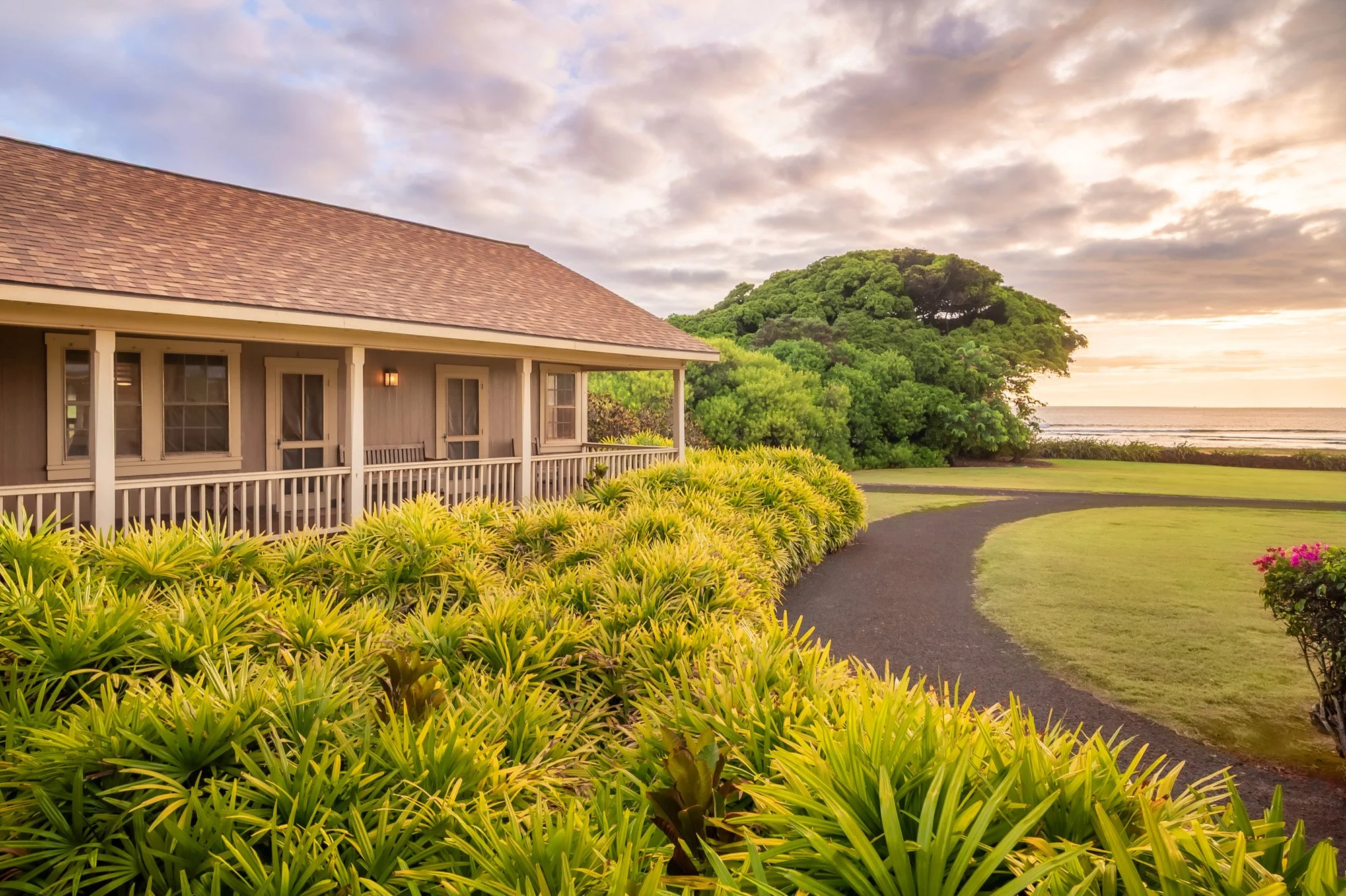
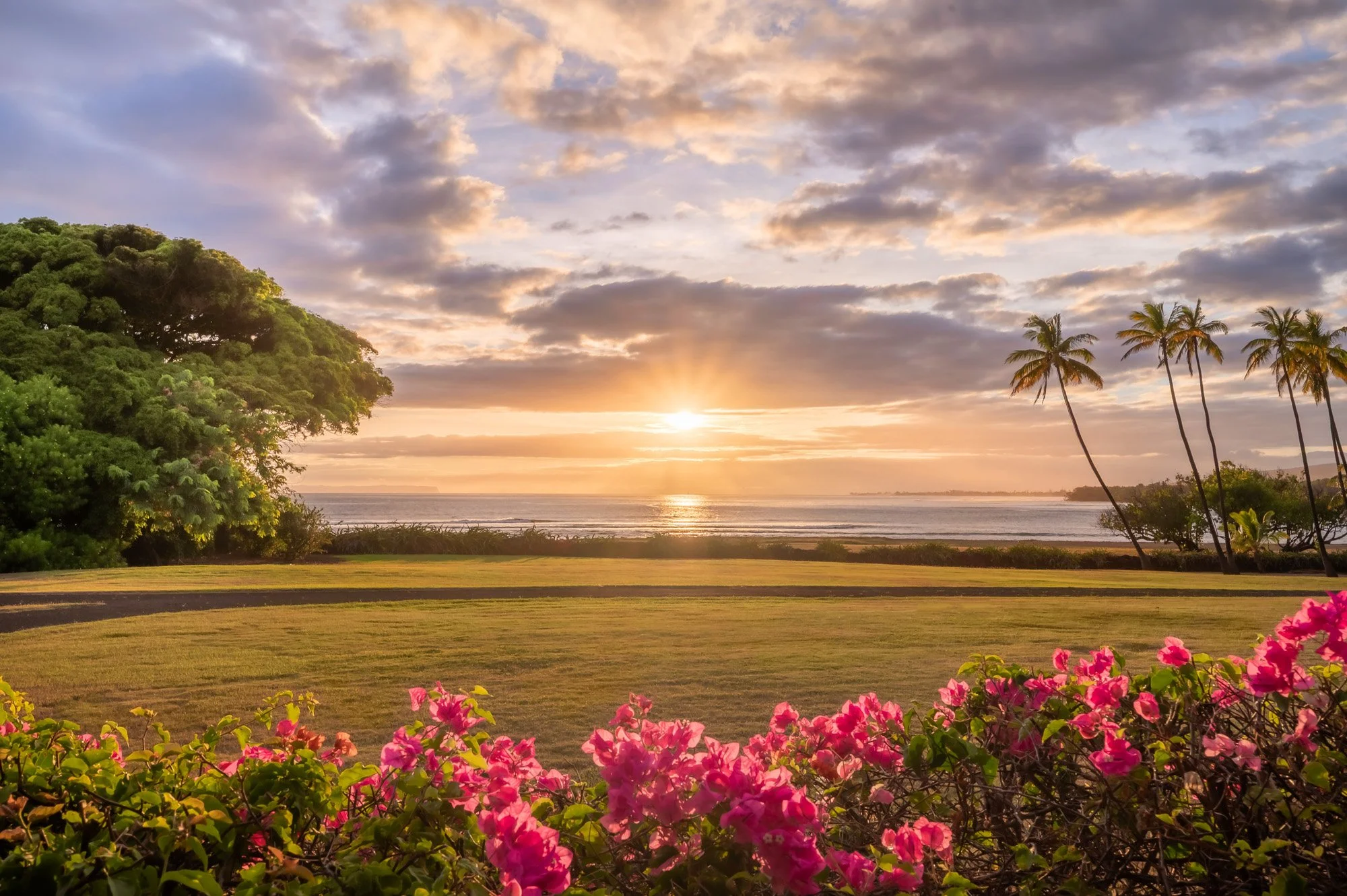
Just over eight and a half beachfront acres on the west side of Kauaʻi, a house that has stood there since 1912, and the family history behind it. Pākalā is commonly translated as the sun shines.
Stand on the lawn at Pākalā Estate with your back to the water and everything in front of you was once sugar: cane running from behind the house up across the flats and into the foothills, watered out of valleys you cannot see from here through ditches cut a generation before the house existed. The house went up in 1912, on the sand, at the seaward end of all of it.
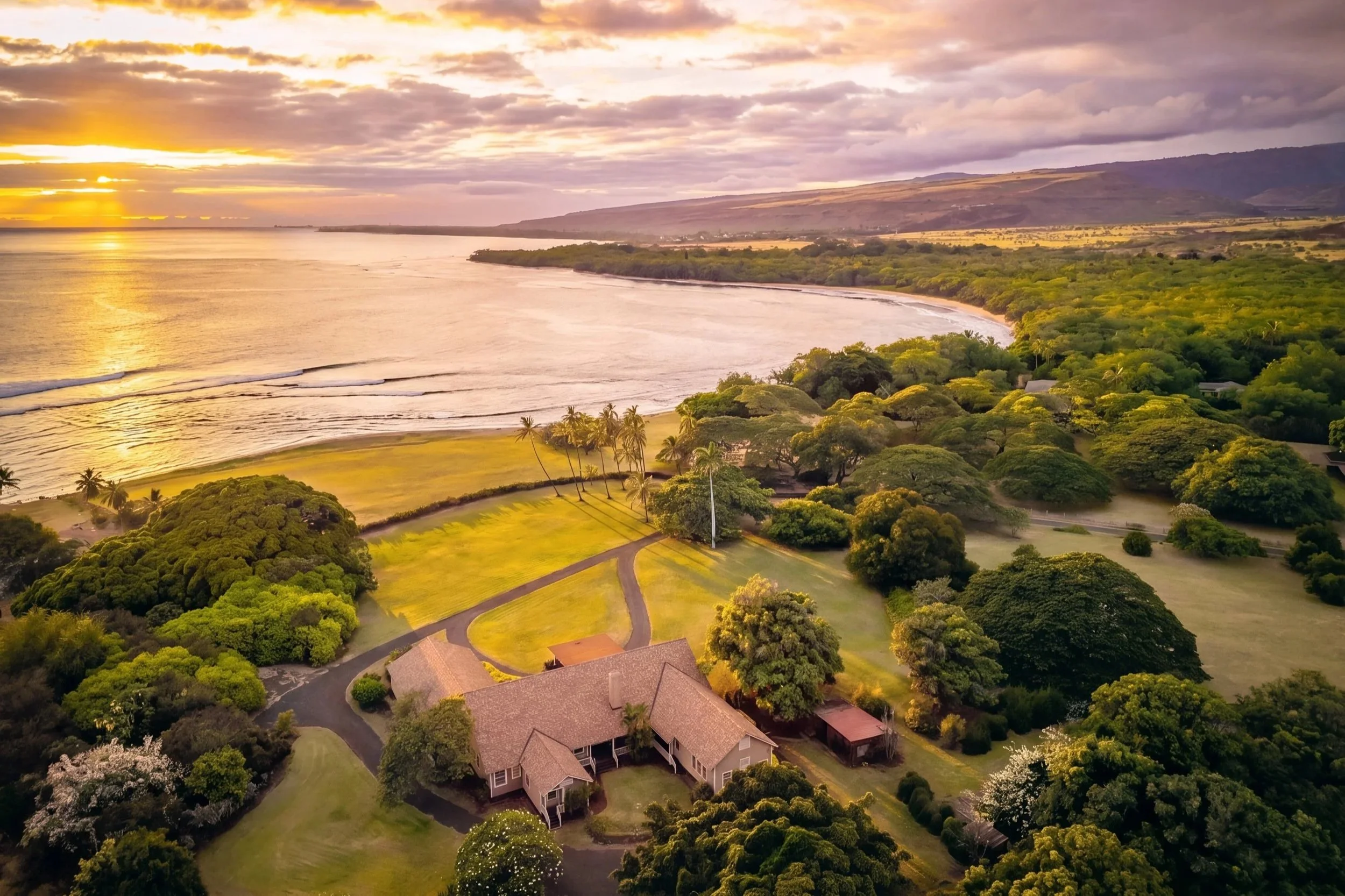
This is the dry side of the island, and the figures that make it dry are extreme even for a place that collects extreme figures. In the uplands at the head of this land the annual rainfall runs to four and five hundred inches, and down at the shore it can be as little as twenty-three. Rain that falls on the mountains behind the house does not arrive here as weather at all. It arrives as water in ditches, on a schedule, because men put it there, and what comes instead, most days of most years, is light. The mountains stand well back and the ocean comes close to the road, and between the two the ground is open enough that you can see a long way along the shore in either direction.
⁂
In September of 1863 a barque called the Bessie put in at Honolulu without notice. She was a three-hundred-ton sailing ship with three masts, and she carried thirteen members of a Scottish family and everything they owned.
They had sailed from New Zealand in April under Captain Thomas Gay, who had married one of the daughters at Pigeon Bay, the family's holding on Banks Peninsula on the east coast of the South Island. They were looking for ranch country. They had called at Tahiti on the way and looked at British Columbia and found nothing in either place that suited.
The woman who had decided all of this was sixty-three years old. Eliza Sinclair had been widowed at forty-six, when her husband and her eldest son were lost at sea on a run to Wellington with the season's produce and every penny the family had aboard. She ran Pigeon Bay herself for the seventeen years after that, and at the end of them she judged it too small for the family that had grown on it.
Within four months of reaching Honolulu she had bought an island, Niʻihau, from Kamehameha V. In the year after that she bought Makaweli, more than twenty-one thousand acres running from this shoreline back toward the mountains at the center of Kauaʻi. She did not draw those boundaries. The land had been held in that shape, a wedge running from the sea to the summit, long before it was ever for sale.
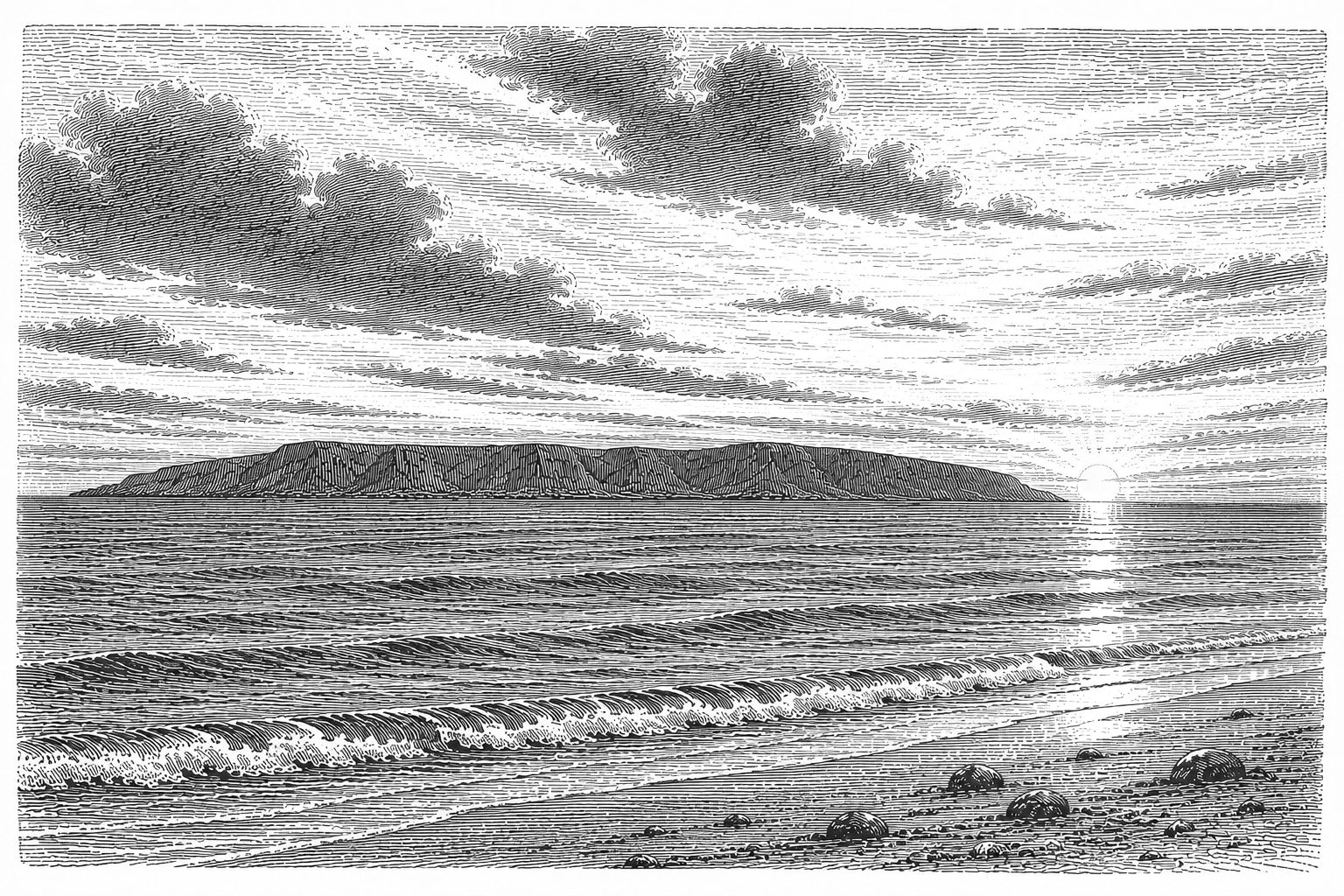
She had crossed the world twice by then, and both of the purchases she made are visible from the lawn: the island low on the horizon ahead, the land rising behind.
For the first fifteen years the ground did what she had bought it to do. Sheep and cattle on the dry lower country, which would carry stock without irrigation and without much else asked of it. It was the same work they had done on Banks Peninsula for twenty years.
⁂
In 1873 the English travel writer Isabella Bird spent time at the Makaweli household and wrote down what she found. At the head of it, in Bird's phrase, a lady of the old Scotch type. Her bachelor eldest son. Two widowed daughters with six children between them. A tutor, a young Prussian officer lately of Maximilian's staff in Mexico and, she wrote, still suffering for it. Another daughter married to a Norwegian on the next property. The family together, on ground large enough to give the grandchildren room as they needed it.
Bird thought them thoroughly at home in the islands. The young people, she noted, spoke Hawaiian as easily as English. The three grown grandsons, whom she put at about six feet, rode and roped like the paniolo around them, could lift a coin off the ground at a full gallop, and were also, she recorded, surf-board riders. It was an accomplishment she had been told no foreigner could acquire, and she had been told wrong. By other accounts the family had learned it from Hawaiians.
Aubrey Robinson was nineteen the year she visited.
Around those same years another woman of the family was at work on the land itself. Isabella Sinclair, who had married one of Eliza's sons, went through the valleys behind this coast and the ground on Niʻihau collecting native flowering plants, painting each one, and taking down what Hawaiians knew about them. Forty-four plates went to London and were published there in 1885.
⁂
Two years after Bird's visit the arithmetic changed. In 1875 the Kingdom of Hawaiʻi and the United States signed a treaty of reciprocity, sugar from the islands went into the American market free of duty, and within a few years cane was worth an industry. Capital began looking for land with water on it, and Makaweli had water. It had four hundred inches a year of it, sitting in the wrong place.
Aubrey Robinson was born in New Zealand in 1853, educated at home and then at law school in Boston, and admitted to the bar in 1875, the same year the treaty was signed. He traveled several years through Europe and Asia after that, and then he came home to Kauaʻi to run cattle.
In 1880 he went into partnership with his cousin Francis Gay and they called the firm Gay & Robinson. Five years later he married Francis's sister Alice, born in New Zealand as he had been and, as he was, a grandchild of Eliza Sinclair. By 1889 he had built a sugar plantation at Makaweli on capital he raised in Scotland, with the Hawaiian Sugar Company leasing about six thousand acres from the family and Gay & Robinson farming cane of its own alongside it.
Then they went after the water, and that took another fifteen years. It meant working up into the headwaters of the Olokele and Kōʻula valleys, cutting through the ridges between, and running what they found out over flats that had never carried any; the Kōʻula system was completed in 1892 and the Olokele system, twelve years after that, in 1904. An account published in 1921 called the works one of the greatest feats of engineering in the islands.
The water turned a dry plain green from the foothills toward the shoreline. The ditches are still running.
The eldest of Aubrey and Alice's five children had been born at Makaweli in 1886, three years before the plantation came together. He was six years old when the first system was finished and eighteen when the second one was, which is to say that he grew up across the whole length of the job, watching his family take water out of the mountains and put it on the ground.
Gay & Robinson became one of the most consequential agricultural operations in the modern history of west Kauaʻi, and the working life of a great many people on this coast whose descendants live here now.
⁂
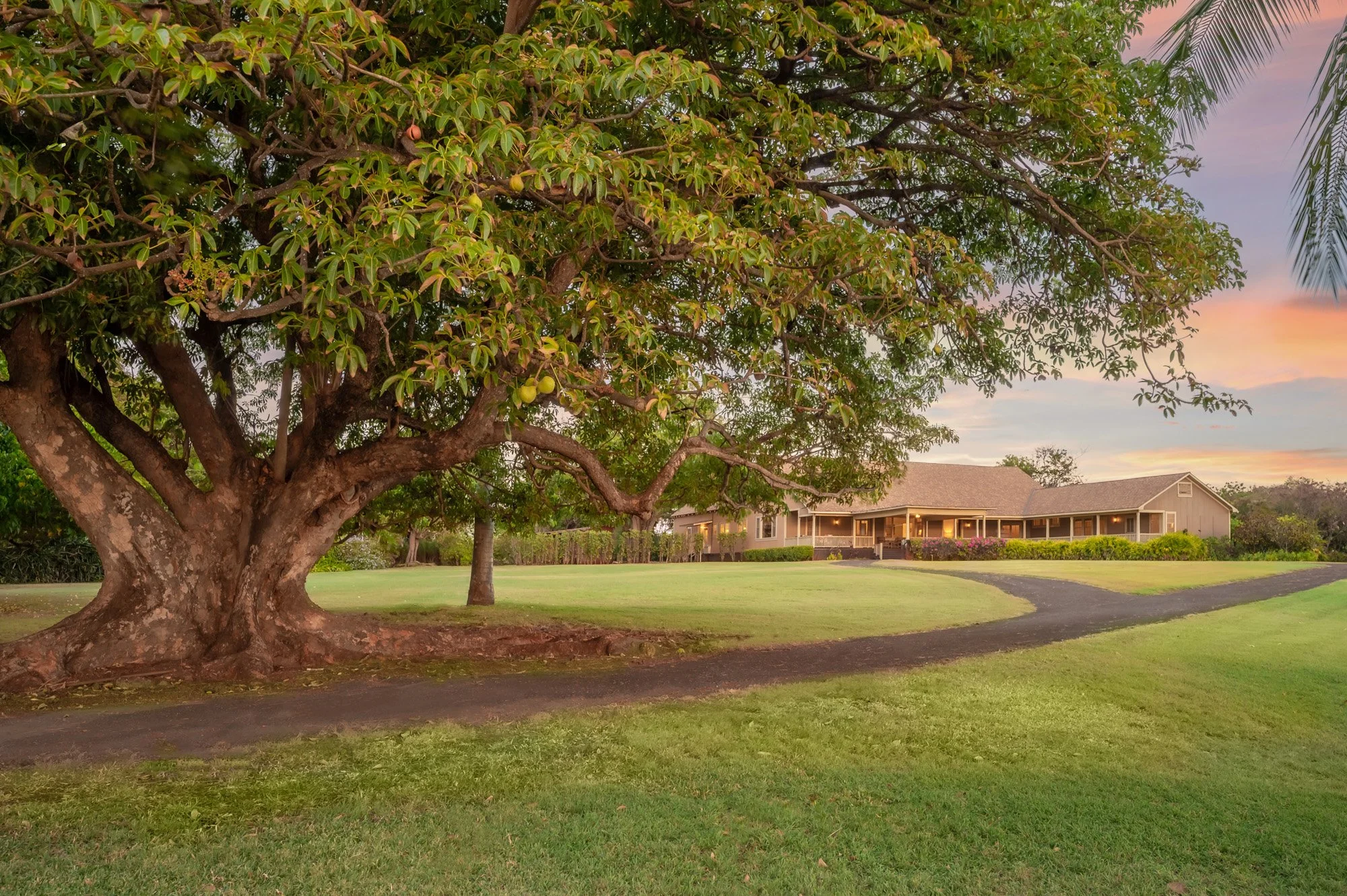
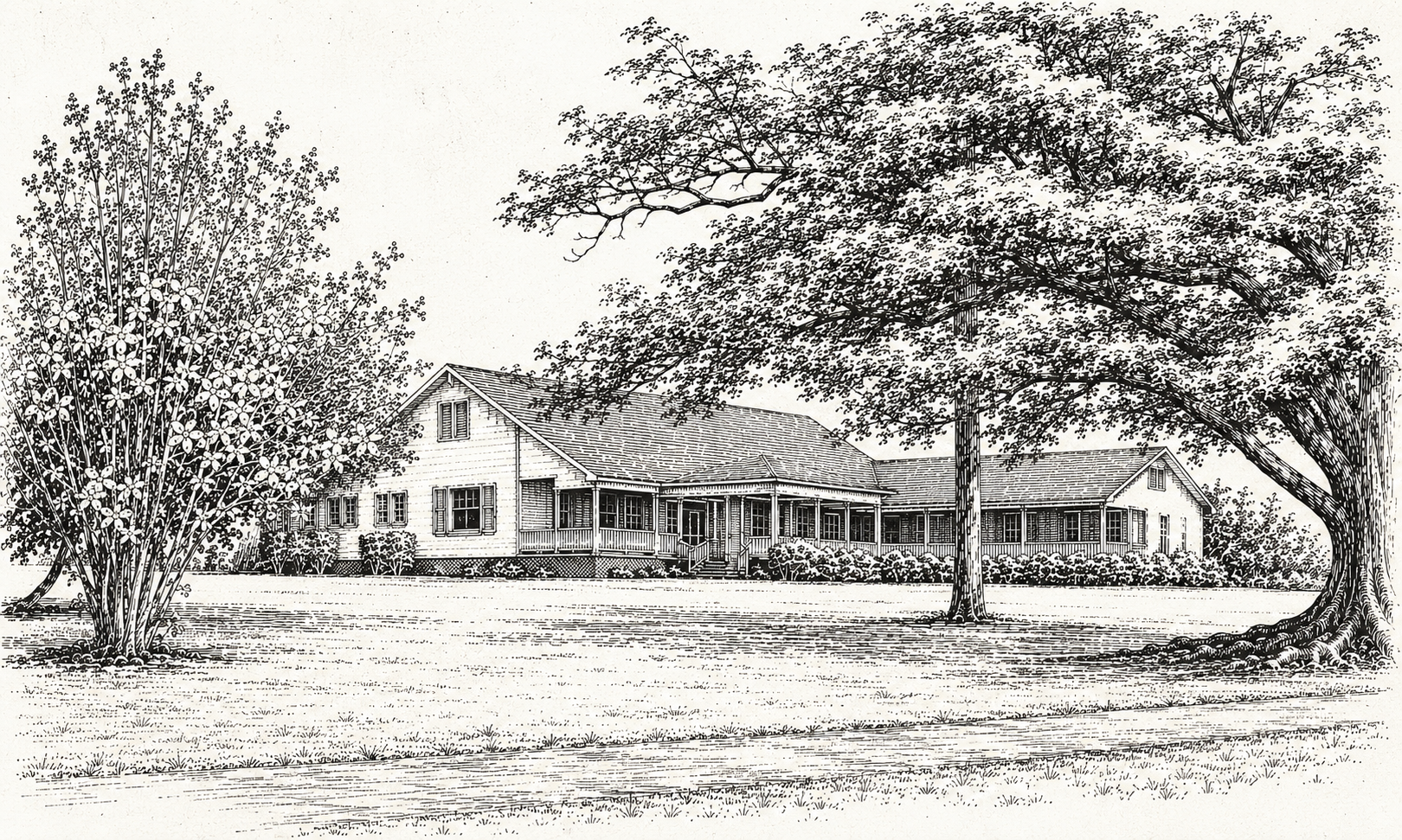
Sinclair Robinson took the plantation over in 1912, at twenty-six, and in the same year a house was built for him and Ethel Glade Robinson on the beach below it. The family called it Pākalā House.
The cane was inland, and so were the water and the mill, and the family kept a lodge far enough up in the uplands that you reached it on horseback. The house went up at the shoreline, where the land runs out into the water.
His great-grandfather had built facing water too, seventy years earlier and half a world away, a house at Pigeon Bay the family lived in and looked at that bay from for twenty years before any of them saw this coast.
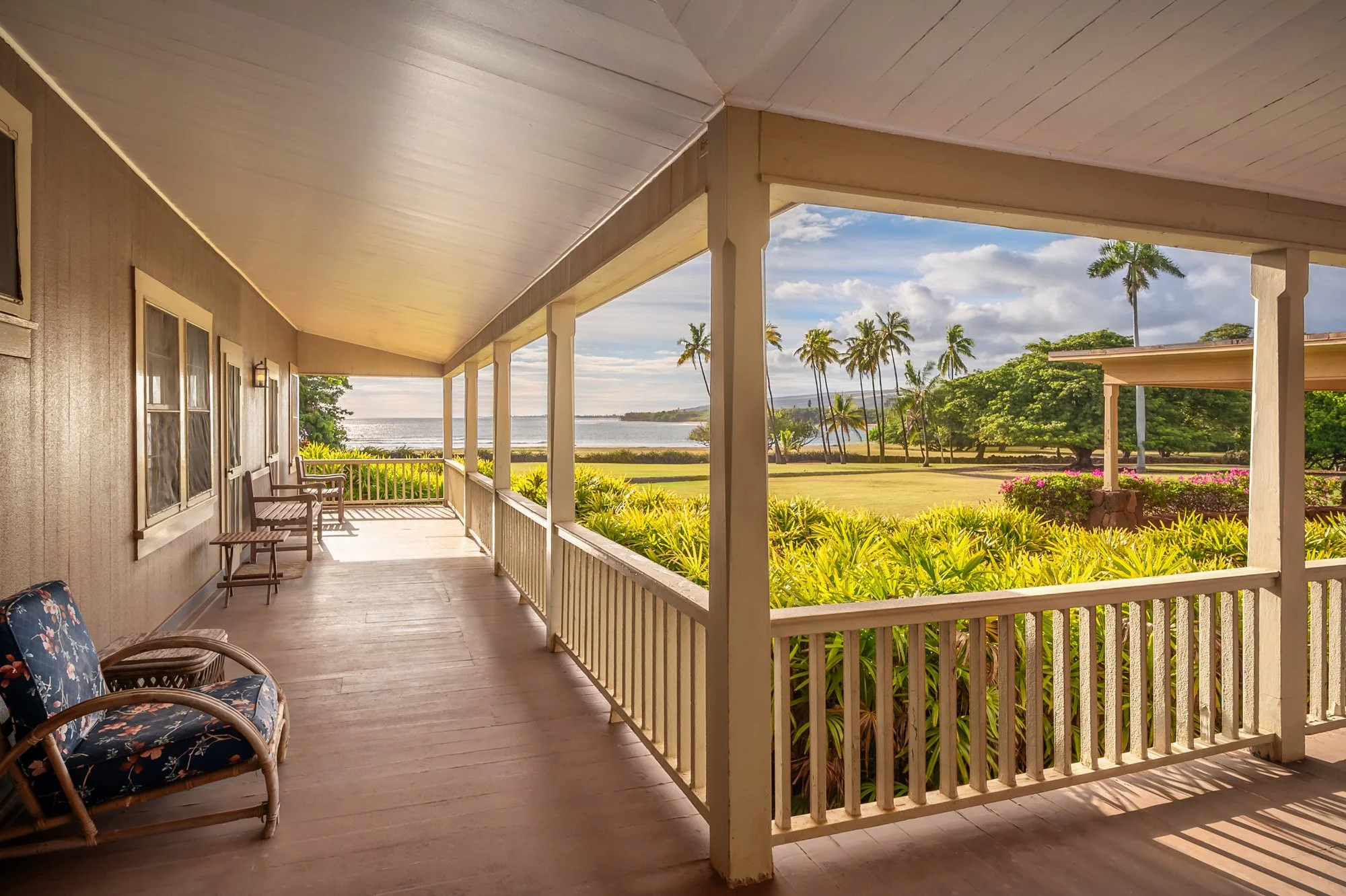
What stands at Pākalā is a single story, long and low, with the lānai running the ocean face and French doors opening onto it from the rooms behind. It was built before mechanical cooling, designed around air coming in off the water and going out the other side, and that is still how it works.
He held the plantation for fifty-two years. He had been born on the land he was running. He took it when Hawaiʻi was a territory and cane was the economy of the islands, and he was still holding it in 1959, the year statehood arrived and the first jets came into Honolulu and the economy that would eventually replace his began. Asked in 1962, at seventy-six, whether he ever meant to retire, he pointed out that the company had no forced retirement program. He was still in the job when he died two years after that.
Ethel died in 1966, fifty-four years after the house was built for them.
⁂
Cane went on at Makaweli for another forty-five years after he died. Gay & Robinson bought the neighboring sugar company in 1994 and took the last harvest in 2009, the final sugar grown on Kauaʻi. The partnership two cousins had formed in 1880 outlasted every other plantation on the island, and by a long way the industry it was built for.
Something else had been happening to the name in the meantime.
By 1971 the wave out in the bay was in print under the name surfers had given it: Infinities, for the length of the ride. It breaks off Pākalā, in the water off this beach, which means the house had been looking at that water for close to sixty years before the name reached a page. An English visitor had sat in a house up the road in 1873 and written down that the young men of this family rode surf-boards, ninety-eight years before the name got into print.
The break answers to both names. Infinities describes the wave. Pākalā describes the land, and it was describing the land a long time before there was anyone in the water to borrow it.
Surf names travel by word of mouth, ahead of anything that would explain them, which is how you end up with people who say Pākalā without cause to know that it describes the weather on a dry shore, or that there is a plantation behind it, or a house on that beach that has been standing since 1912.
⁂
The house did not move. It has gone on being lived in, the ditches still bring water down out of the valleys behind it, and Niʻihau still sits on the horizon in front.
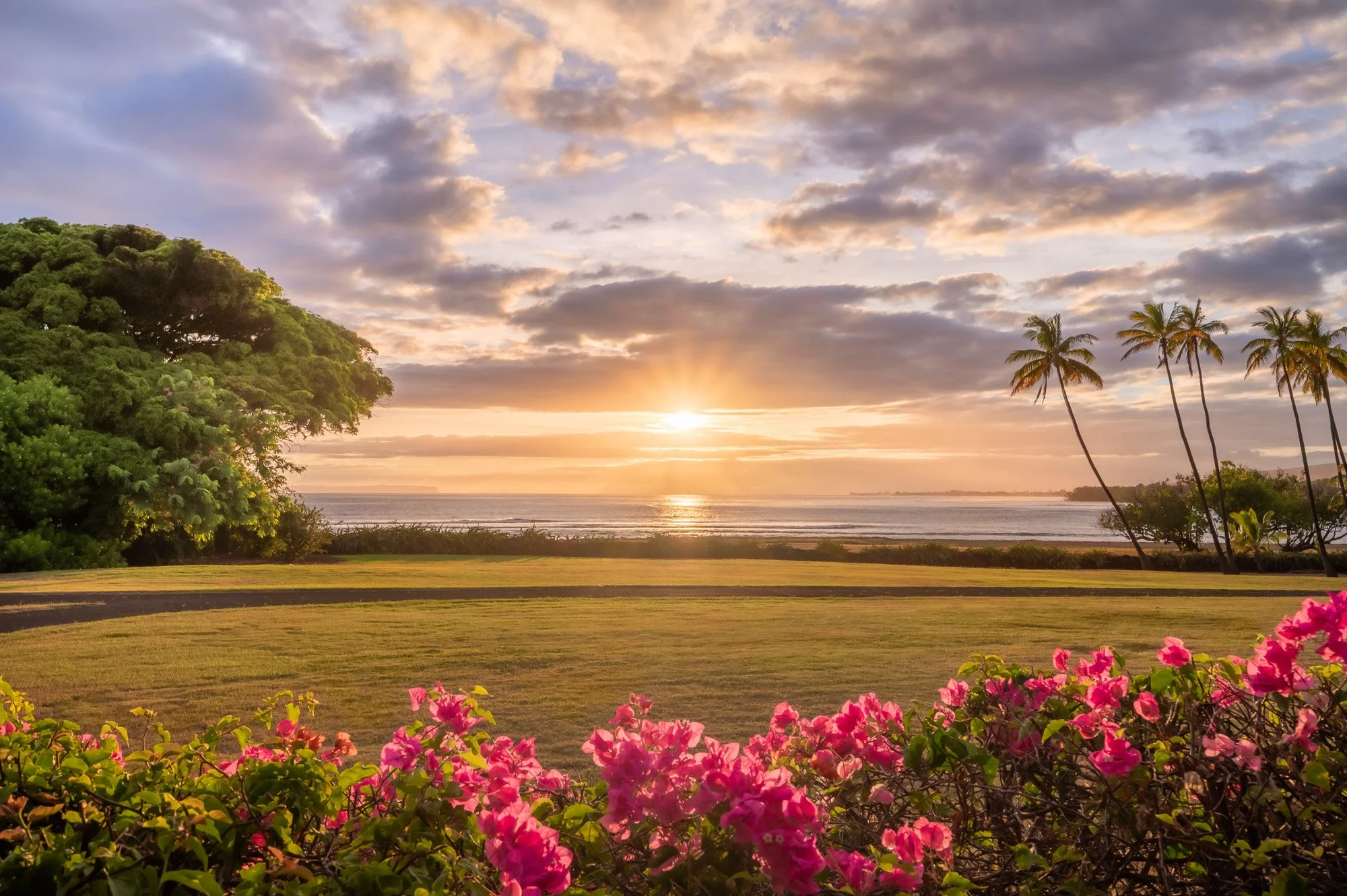
The name was here before all of it, and it is a plain description of what the place does. The coast is dry, the ground is open, and in the last hour of the day the light comes across the water and up the lawn and holds under the eaves until it goes.
It has been doing that here since long before there was a house to do it under.
A note on sources
This account rests on the history the Robinson family has kept and published of its own line, from Scotland to New Zealand to Niʻihau and Makaweli. Nearly everything here about the Sinclairs, the Gays and the Robinsons comes from that record, and it exists to be told because the family assembled and preserved it.
Dates and figures have been checked and supplemented against Isabella Bird's The Hawaiian Archipelago, the 1921 edition of Men of Hawaii, reporting in The Garden Island, the historical scholarship of Hugh Laracy, and the public record of west Kauaʻi's rainfall and irrigation systems.
-
![]()
Pākalā
-
![]()
The Estate
-
![]()
The Home
-
![]()
Summary
-
![]()
Gallery